
How Do Your Eyes Change with Age?
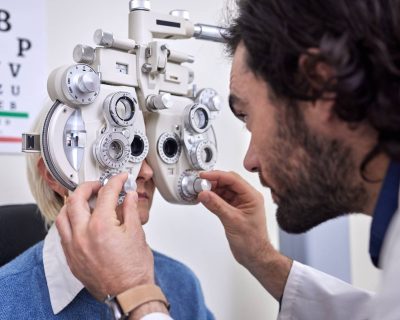
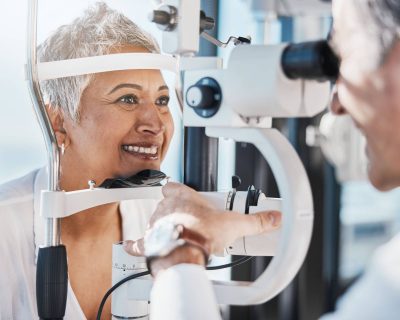
Generally, most parts of your body change as you age, and your eyes are no exception. With each stage in life, you are bound to experience some changes in your eyes. While some of these changes are positive, others may be negative. This is why it is often advisable for everyone to visit their optometrist on a regular basis for routine eye exams and early detection of any potential issues.
From the rapid neural wiring of infancy to the gradual structural shifts of our senior years, ocular development is a lifelong process. Understanding these natural transitions empowers you to recognize what is a standard developmental milestone versus what might signal an underlying pathology. By pairing this awareness with consistent clinical care, you ensure that every visual transition throughout your lifetime is managed smoothly and proactively.
Here, we will outline how your eyes change with age.
Newborns
During the first few months, babies are only capable of focusing on items that are about 8 to 10 inches away from them. Over time, their eyes will begin to focus on their parent’s faces, even if they are a bit further than 10 inches. By the end of the first month, a baby’s vision will have improved significantly, however, their eye coordination is still very poor at this time. It’s not until roughly three months that an infant will be able to move their eyes in coordination or even follow the movements of an object.
At birth, an infant’s visual cortex and retinal photoreceptors are still immature, which explains why high-contrast, black-and-white patterns capture their attention far more effectively than soft pastel colours. Because the brain is still learning to coordinate the six extraocular muscles controlling each eye, it is entirely normal to see occasional wandering or momentary crossing during the first eight to twelve weeks. As visual pathways rapidly myelinate and strengthen through daily interaction, infants gradually develop steady central fixation, binocular depth perception, and the smooth visual pursuit required to track faces and toys across a room.
Five to twelve months
By five months, infants will have better coordination and control of their eyes. This includes both eyes working together to focus on objects near and far. This will continue to improve for the next six to eight months. It is recommended that babies are taken for an eye checkup when they are roughly eight months old.
Between six and nine months, colour vision matures to near-adult levels, and stereopsis—the ability to perceive three-dimensional space—develops rapidly as crawling encourages hand-eye-body coordination. A comprehensive infant assessment, such as through the InfantSEE program, checks for high refractive errors, excessive farsightedness, anisometropia, and structural misalignments like strabismus. Catching alignment anomalies or focusing imbalances during this critical window prevents amblyopia (lazy eye), ensuring that both eyes develop equal, robust neural connections to the brain’s visual cortex.
School-age
A child’s vision continues to improve as they enter school, their vision will be utilized differently as they begin to rely on their eyesight to perform important functions at school and home.
During these formative academic years, the visual system transitions from basic object recognition to complex, fine-motor tasks like saccadic reading across lines of text, shifting focus between desk notebooks and whiteboards, and sustained convergence. Undetected visual issues—such as accommodative dysfunction, uncorrected astigmatism, or poor visual processing—can significantly hinder reading comprehension, leading to frustration, shortened attention spans, and classroom fatigue. Regular comprehensive eye exams ensure that growing children possess sharp clarity, balanced binocular coordination, and comfortable eye-focusing stamina to excel academically and socially.
Adolescence and early adulthood
During adolescence, puberty will lead to a growth spurt that will also increase the size of the eyes. By their early 20s, a person’s eyes will have grown to their final size (around 24 millimeters). Any growth beyond this size may be abnormal and should be examined and monitored by an optometrist. Notably, due to the changes in their eyes, some adolescents and young adults will start to rely on prescribed eyewear to maintain clear vision.
As the axial length of the eyeball elongates alongside rapid skeletal growth, myopia (nearsightedness) frequently accelerates during these teenage years. Intense visual demands from prolonged digital screen study and decreased time spent in natural daylight can exacerbate this elongation, pulling the retina taut. Routine optometrist evaluations during this period are essential to monitor refractive shifts, implement myopia management therapies if needed, and assess corneal biomechanics to ensure that visual stabilization occurs safely as the eyes reach their full adult dimensions.
Later adulthood
As you get older, the performance of your eyes may begin to diminish. The decline rate will accelerate when you are around 60 years of age and above. Also, you can experience reduced pupil size, dry eyes, decreased colour vision, vitreous detachment, loss of peripheral vision as you get older. Susceptibility to potential eye issues will also increase. Some of these issues include but are not limited to cataracts, presbyopia, glaucoma, and macular degeneration.
Starting in the early to mid-40s, the natural crystalline lens begins to lose its youthful elasticity, causing presbyopia—the gradual loss of near-focusing ability that necessitates reading glasses or progressive lenses. In subsequent decades, the vitreous gel naturally liquefies and shrinks, often causing sudden floaters or flashes of light, while the crystalline lens gradually becomes yellowed and clouded by cataracts. Furthermore, age-related microvascular changes increase the vulnerability of the optic nerve and central macula, making annual dilated examinations and advanced ocular imaging indispensable tools for catching progressive diseases early and preserving functional independence.
Conclusion
The human eye continues to change and evolve over time. Everyone experiences these shifts at a different pace, but no one avoids them entirely.
This makes regular appointments with your optometrist essential. Routine visits allow your eye doctor to track subtle changes in ocular structure. They can also detect potential issues before noticeable symptoms arise. With early diagnosis, your optometrist can create a targeted treatment plan. This care slows the rate of progression and keeps your vision clear.
Aging is an inevitable part of life, but preventable vision loss is not. Stay mindful of the subtle symptoms that accompany each decade. By taking an active role in your ocular wellness, you give yourself the best opportunity to enjoy comfortable eyesight for life. Make routine check-ups a non-negotiable part of your healthcare regimen. Doing so ensures every phase of your visual journey receives expert guidance, tailored optical solutions, and lasting peace of mind.