
How to Improve your Vision Health
Many people who have advanced eye disease have waited too long to improve their vision health. Researchers have linked glaucoma, cataracts, retinal vein occlusions, and other eye conditions to mostly controllable risk factors. Taking proactive steps today can significantly lower your risk of long-term vision loss while enhancing your daily visual performance.
It is important to keep your vision health because it can lead to a better quality of life. You perform better in all aspects of your life when your vision health is at its best. Below are 4 ways you can improve your vision health:
1. Exercise for the Body
Did you know daily exercise is key to your vision health? Exercise is important throughout life and has been shown to improve vision health.. You should try to walk for 30 minutes per day at least. However, a complete workout routine is best; cardio, stretching, and strength training.
Physical activity plays a vital role in maintaining healthy ocular blood pressure and promoting vascular health throughout the body. When you engage in consistent cardiovascular exercise, you increase blood circulation to the retina and optic nerve, supplying essential oxygen and nutrients. Regular physical fitness also helps manage systemic conditions such as diabetes, high blood pressure, and elevated cholesterol, which are all leading contributors to severe eye diseases like diabetic retinopathy and retinal vessel occlusions. Incorporating daily movement into your routine creates a strong foundation for lifelong vision protection.
2. Exercise Your Eyes
Did you know there are only six small muscles that control each of your eyes? If these muscles are weak or strained, the eyes do not work properly. Daily eye exercises can keep these muscles strong and prevent myopia, astigmatism, and farsightedness.
Targeted eye movements encourage flexibility, reduce focal strain, and improve overall coordination between the eyes and the brain. Spending prolonged hours staring at static focal distances can cause extraocular muscle fatigue and decreased focusing flexibility. By dedicating a few minutes each day to structured eye conditioning exercises, you help relieve built-up tension, improve accommodation speed, and support your eyes’ natural ability to track objects smoothly across different distances.
Here are 3 ways you can exercises your eyes:
- Roll your eyes. Start by looking up and then slowly circle 10 times clockwise and 10 times counterclockwise. This simple movement stretches and tones the surrounding extraocular muscles while promoting healthy fluid circulation around the eye socket.
- Focus. Hold a pen at arm’s length and focus your eyes on it. Slowly bring the pen closer away from your nose, then slowly move it back keeping your eyes focused on the pen. Repeat this 10 times. Practicing this convergence technique strengthens your eye muscles’ ability to switch focus smoothly between near and distance targets.
- Take a mini-nap. Put your head back, close your eyes, and relax for about 3 minutes. Giving your ocular muscles a complete break from light exposure and focal demands allows the ciliary body to rest and reduces micro-strains accumulated throughout the day.
3. Better Screen Habits
Did you know that blue light from phones and other electronic devices may have a negative impact on our eyes? Many people hold screens close to the face or at less than arm’s length for extended periods which weakens the eyes’ muscles and cause eye strain and headaches.
Modern digital environments place unprecedented demands on our eyes, leading to widespread complaints of digital eye strain, dryness, and fatigue. High-energy visible (HEV) blue light emitted by digital monitors, smartphones, and tablets penetrates deep into the eye, potentially contributing to retinal oxidative stress over time. Furthermore, working close to digital screens forces the internal ciliary muscles to remain continuously contracted, leading to accommodation spasms and persistent discomfort. Adopting conscious habits when interacting with technology is essential to preserving long-term visual comfort.
Here are 3 ways to develop better screen habits:
- Limit your screen time to less than 6 hours per day. Structuring your day to include screen-free breaks gives your eyes an opportunity to recover from intense near-focus strain and high blue light exposure.
- For every 20 minutes, look 20 feet away for 20 seconds. Known as the 20-20-20 rule, this simple practice forces your ciliary muscles to completely relax, resetting your eye alignment and reducing focal fatigue.
- Bling more often when using electronics as starting at screens lowers our blink rate. Staring at digital displays decreases natural blinking by up to 50 percent, causing the protective tear film to evaporate quickly. Consciously blinking restores vital moisture across the corneal surface.
Related Article: How to Avoid Computer Vision Syndrome
4. Regular Eye Exams
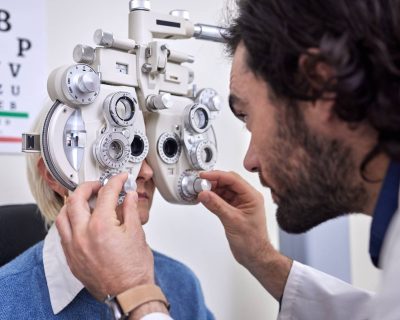
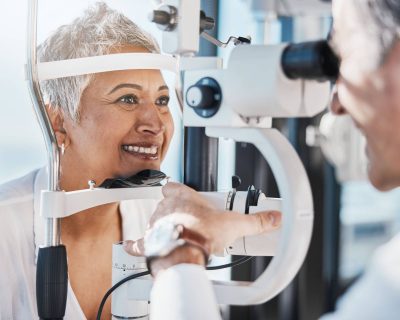
It is important to go to your optometrist regularly to get eyeexams done and get treatment for any existing issues and prevent eye health-damaging problems in the future.
Comprehensive eye exams extend far beyond simply updating your glasses or contact lens prescription. During an examination, an optometrist utilizes specialized diagnostic instruments to inspect the internal and external structures of your eyes, evaluating the retina, optic nerve, corneal surface, and intraocular pressure. Early-stage eye conditions like glaucoma and macular degeneration often develop silently, producing zero noticeable symptoms until significant, irreversible vision loss has already occurred. Scheduling annual or biennial eye checkups ensures that subtle pathology changes are caught early when treatment options are most effective.
Protecting Your Vision for the Future
Maintaining optimal vision health requires a proactive approach that combines healthy lifestyle choices, mindful daily habits, and professional clinical care. Protecting your eyes today ensures that you retain clear, comfortable vision well into your senior years, allowing you to maintain your independence and enjoy your daily activities without limitation.
At New Optical Palace Kitchener, we are committed to helping you safeguard your vision at every stage of life. Our experienced optometric team offers comprehensive eye examinations, personalized visual ergonomics advice, and advanced diagnostic screenings tailored to your unique lifestyle. Schedule your next eye exam with our dedicated team today to protect your eyesight and support your overall health.