
5 Ways To Improve Vision
No matter if you are in your 20s, 40s, or 60s, having proper vision should be considered a treasure. As time passes many individuals will begin to realize their eyesight will begin to weaken, and items they used to be able to see previously will seem blurred or out of focus. In order to improve your vision, you may require prescribed corrective lenses or perhaps laser eye surgery. But there are steps you can take that will help you improve your vision.
Here are 5 ways by which you can improve your vision.
1. Enjoy eye strengthening foods
Your diet is not only important for your physical health but for your eyesight as well. It is well
known that carrots are great for your eyes because they are rich in Vitamin A. But, did you know that apart from Vitamin A there are other vitamins and minerals that are required to maintain good eyesight? These include foods that are rich in Vitamin E, C, zinc, and copper. Consuming fish that are high in fatty acids is also positive for your vision as the fatty acid will help strengthen the cellular membrane located on the inner surface of your retina.
Dark leafy greens such as spinach, kale, and collards are loaded with lutein and zeaxanthin, two plant pigments that accumulate directly within your macula. These carotenoids act as internal sunglasses, filtering harmful blue wavelengths and neutralizing free radicals produced by bright light exposure. Including cold-water fatty fish like salmon, mackerel, and sardines provides abundant DHA and EPA omega-3s, which stabilize the lipid layer of your tear film and prevent chronic dry eye. Complementing these with citrus fruits, bell peppers, seeds, and nuts ensures steady collagen production in your sclera and cornea, strengthening the physical foundation of your visual system.
2. Exercise your eyes
What most people don’t realize, is that your eyes have muscles and with proper exercise, you can help keep them in good shape. Completing some simple eye exercises in the morning, and just before going to bed or even whenever your eyes feel tired will help keep your eyes healthy. Commit to completing eye exercises for a month regularly and you will feel the difference yourself. Here is a simple exercise you can use to improve your focus. Hold a pen at arm’s length from your face. As you focus on the pen keep bringing it closer to your eyes until it’s six inches from your face. You can repeat this several times per set.
Engaging your extraocular and ciliary muscles with targeted convergence exercises enhances your eyes’ ability to shift focus smoothly between different focal distances. Another effective routine is the “figure eight” exercise, where you trace an imaginary sideways number eight about ten feet in front of you for several minutes, then reverse directions. This dynamic range-of-motion training improves smooth pursuit tracking and ocular coordination while easing the rigid tension that builds up from staring at stationary planes for hours. Consistent training promotes fluid muscle movement, sharpens accommodative flexibility, and reduces visual fatigue during demanding visual tasks.
3. Rest your eyes regularly
Optometrists suggest that resting your eyes is necessary for maintaining your eye health. Closing your eyes for a few moments several times a day will give your eyes some much-needed rest. This is especially important for those who work in front of a monitor most of the day. Even a small change of scenery can help give your eyes a rest from your screens.
Extended focus on close-up targets locks your focusing lens in a contracted state, generating persistent strain and dull headaches across the brow. Incorporating the 20-20-20 rule—looking at an object 20 feet away for 20 seconds every 20 minutes—allows your ciliary muscle fibres to release their contraction and reset to their resting state. In addition, closing your eyes completely for brief intervals allows the natural tear film to recoat and nourish the vulnerable corneal epithelial surface. Stepping outdoors for natural daylight exposure and panoramic horizons relieves accommodative stress while supporting your body’s circadian rhythm and overall visual comfort.
4. Say no to smoking
Smoking may lead to multiple different health complications, including negatively affecting your vision. Over time prolonged smoking can increase the chances of developing cataracts.
Cigarette smoke floods your bloodstream with heavy metals, tar, and thousands of chemical toxins that cause systemic oxidative stress and restrict ocular microcirculation. Smokers are up to four times more likely to develop age-related macular degeneration (AMD), which permanently destroys fine central vision by breaking down retinal pigment epithelial cells. Furthermore, inhaled carcinogens irritate the ocular surface, deplete natural antioxidant stores in your lenses, and damage delicate optic nerve fibres through vascular constriction. Quitting smoking immediately arrests this toxic exposure, revitalizing blood flow to retinal capillaries and preserving long-term sight.
5. Get regular eye check-ups
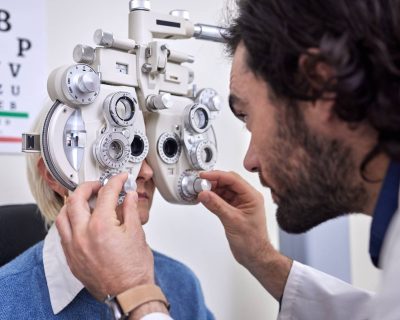
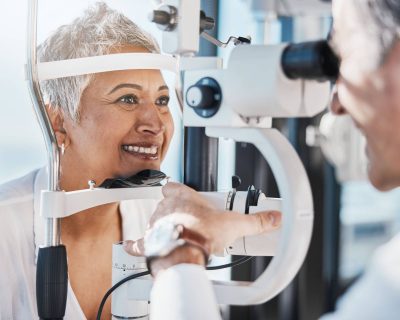
Visiting an optometrist on a regular basis is important for maintaining good eye health. Your optometrist is able to recognize any changes in your eyes or your vision and work with you to build a plan to help prevent any potential issues. As you get older, it is even more important to regularly have your eyes checked, as changes in your vision may potentially occur at a faster rate.
A routine clinical examination goes far deeper than determining an updated eyeglass prescription; it provides a comprehensive assessment of your internal ocular structures. Advanced diagnostic procedures—such as digital retinal photography, optical coherence tomography, and intraocular pressure checks—detect progressive disorders like glaucoma, diabetic retinopathy, and corneal dystrophies before any outward symptoms appear. Establishing regular baseline evaluations enables your eye doctor to monitor subtle year-over-year adjustments in nerve fibre thickness and vascular integrity. Catching microscopic changes early empowers you to implement targeted medical treatments and lifestyle adjustments that keep your eyesight strong, resilient, and clear.